Types of Cabinet Latch and Catch
The best fitting depends on whether you want the mechanism to be
concealed, partially visible or used as a decorative feature.
-
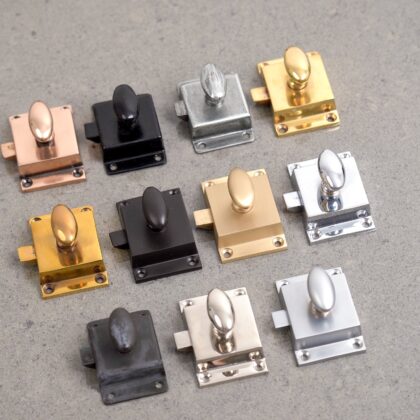
Cupboard Latches
are visible turn-button catches suited to farmhouse kitchens,
traditional cupboards and country-style furniture.
-
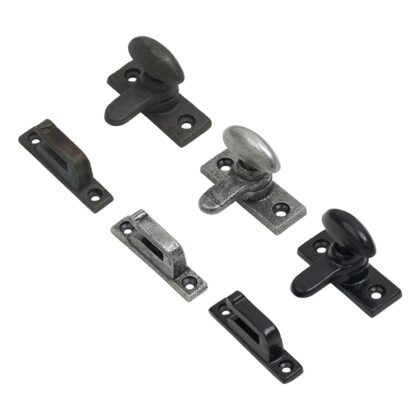
Sprung Cabinet Latches
have an operating knob and spring-loaded mechanism for holding a
cabinet door closed.
-
Cupboard turns use a rotating surface-mounted fitting to retain a
cupboard door or pair of doors.
-
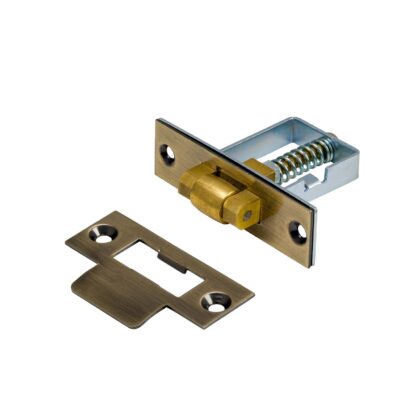
Adjustable Roller Catches
allow a suitable door to be pulled open and pushed closed without
operating a separate latch handle.
-
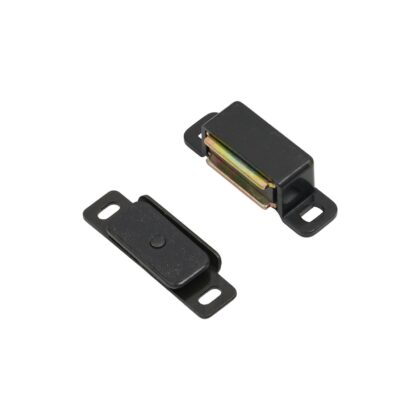
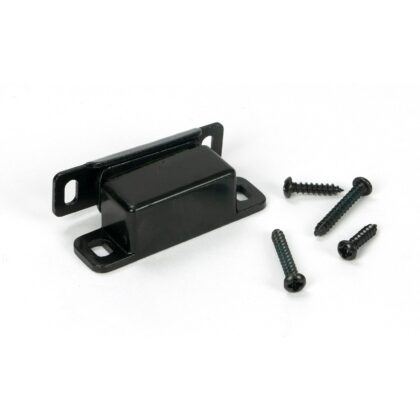
Magnetic catches use magnetic force to retain a lightweight cupboard
door while keeping the closing mechanism visually discreet.
What Is an Adjustable Roller Catch?
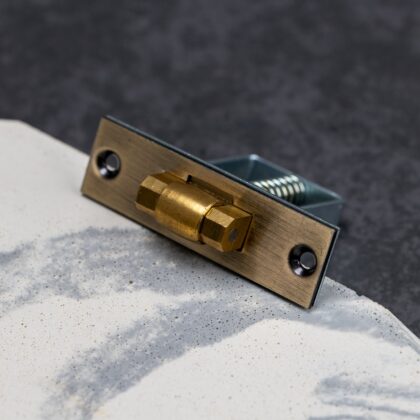
A roller catch uses a sprung roller that engages with a receiver or
strike plate when the door is pushed closed. Pulling the door applies
enough pressure to release the roller, allowing the door to open.
Adjustable designs allow the tension or projection to be altered so the
closing action can be matched more closely to the door. Correct
alignment is important: a catch positioned too tightly may make the
door difficult to open, while insufficient engagement may allow it to
move or open unexpectedly.
Our adjustable roller catches are available in Antique Brass, Matt
Black, Polished Chrome, Satin Brass, Satin Nickel and Urban Dark Bronze.
Traditional Cupboard Latches
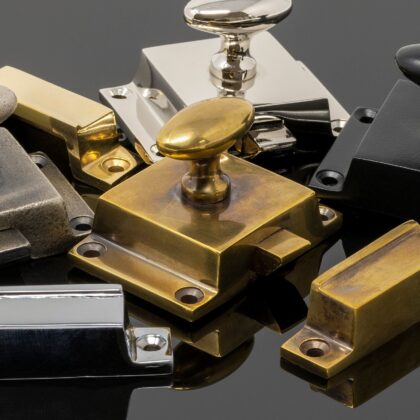
Surface-mounted cupboard latches provide both a closing mechanism and a
visible decorative detail. They work particularly well on Shaker
kitchens, pantry cupboards, larders and freestanding furniture where a
traditional fitting is part of the design.
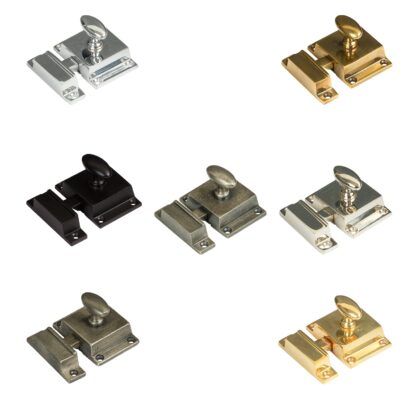
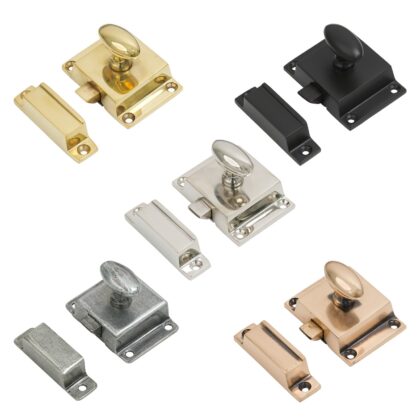
The solid-brass cupboard latches are available in seven finishes:
Polished Brass, Antique Brass, Polished Chrome, Polished Nickel, Matt
Black, Pewter and Gun Metal.
Other sprung cabinet-latch designs are available in a wider selection
of materials and finishes. Check the individual product listing because
construction, dimensions and finish availability differ between
designs.
Do Cabinet Latches Provide Security?
Standard cabinet latches, roller catches, magnetic catches and cupboard
turns are intended to keep a door neatly closed. They are not security
locks and should not be relied upon to protect valuable, hazardous or
restricted items.
If a cupboard requires controlled or key-operated access, choose a
purpose-designed cabinet lock with an appropriate level of security
instead.
Choosing the Right Cabinet Catch
Consider how you want the cupboard to open and how visible the fitting
should be:
-
Choose a roller or magnetic catch for a simple push-to-close
arrangement.
-
Choose a visible cupboard latch for traditional character and a
deliberate operating action.
-
Choose a cupboard turn for a straightforward surface-mounted fitting
on suitable cupboard doors.
-
Choose a sprung cabinet latch when you want a decorative operating
knob and positive closing action.
Also consider the door size, weight, thickness and construction. A
catch intended for a lightweight cabinet door may not be suitable for a
full-height or unusually heavy cupboard.
What to Check Before Ordering
-
Compare the product dimensions with the available mounting area.
-
Check whether the fitting is surface-mounted, recessed or requires
both types of installation.
-
Confirm that the receiver can be aligned correctly with the latch or
catch.
-
Check the door thickness and fixing length.
-
Make sure the knob or handle provides enough grip to overcome the
catch tension.
-
Confirm what components and fixings are supplied with the selected
product.
Product pages include dimensions and finish information where
available. Check these carefully when replacing an existing fitting
because fixing centres and overall sizes can vary.
Coordinating Cabinet Hardware
Complete your kitchen or furniture project with matching
cupboard knobs
or
cabinet pull handles
.
Repeating the same finish across latches, knobs and handles can create a
consistent look throughout the room.
Exact colour and sheen may vary between manufacturers and product
ranges, even where finishes have similar names. Compare product
photographs and finish descriptions before ordering a complete set.
Installing and Adjusting Cabinet Latches
Position the latch and receiver carefully before drilling permanent
fixing holes. The two parts must align when the door is fully closed
without pulling the door out of position.
With adjustable roller catches, begin with lighter engagement and test
the opening action before increasing the tension. The door should remain
closed but open comfortably using its knob or handle.
Caring for Cabinet Latches
Wipe the fitting with a soft, dry or slightly damp cloth. Avoid
abrasive pads, metal polish and harsh cleaning sprays unless recommended
in the product’s care instructions.
If a catch becomes difficult to operate, check its alignment and
fixings before applying lubricant or forcing the mechanism. Cabinet
doors can move slightly over time as hinges loosen or timber responds to
changing conditions.