What Is a Cabin Hook?
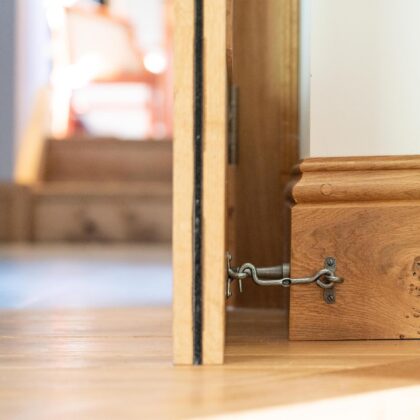
A cabin hook is a simple hook-and-eye fitting used to hold a door,
window, shutter or cupboard in position. The hook is attached to one
surface and slots into an eye or receiver fitted to the other.
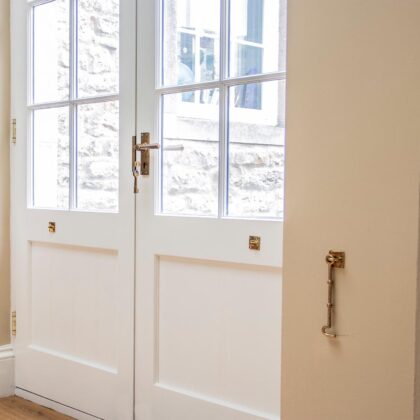
Cabin hooks are commonly used to hold an open door against a wall and
prevent it moving or banging in a light breeze. They can also be used to
secure shutters, cupboards and suitable garden-building doors in a
closed position.
A cabin hook is a positioning latch rather than a security lock. Where
security is required, it should be used alongside a suitable lock,
latch or bolt.
Explore Our Cabin Hook Designs
-
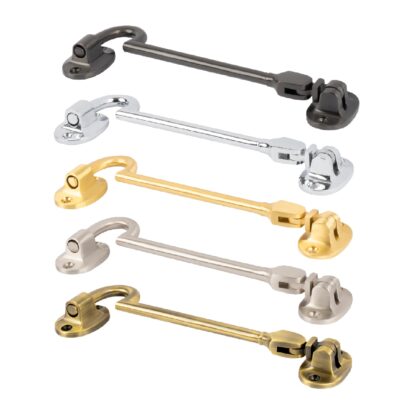
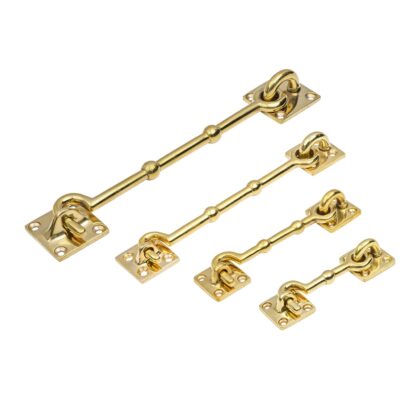
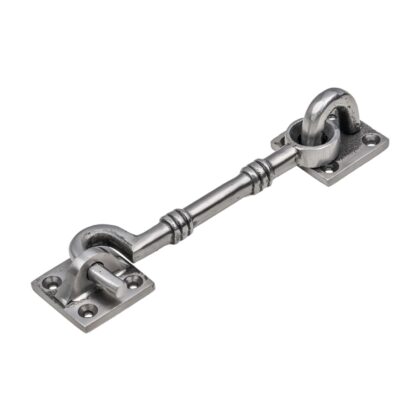
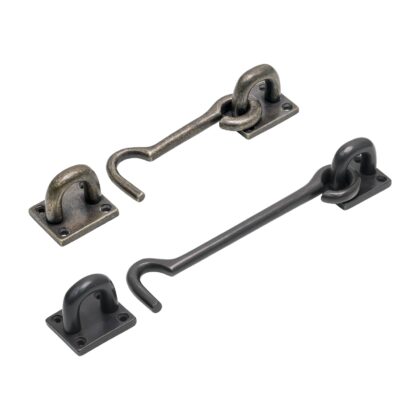
Classic solid brass cabin hooks
provide a clean traditional appearance in finishes designed to
coordinate with brass door furniture.
-
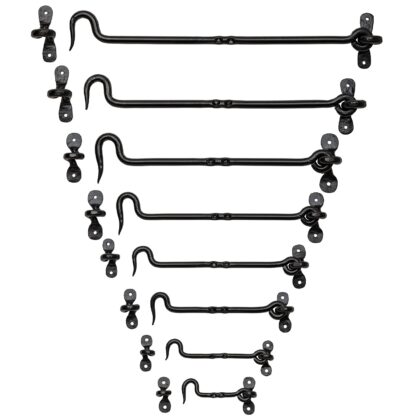
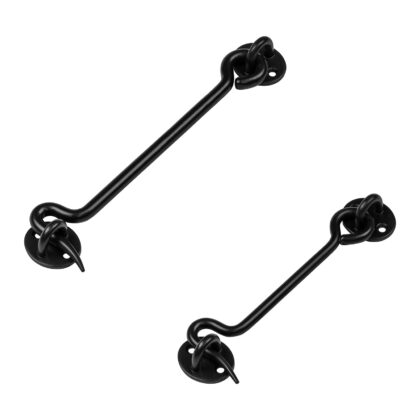
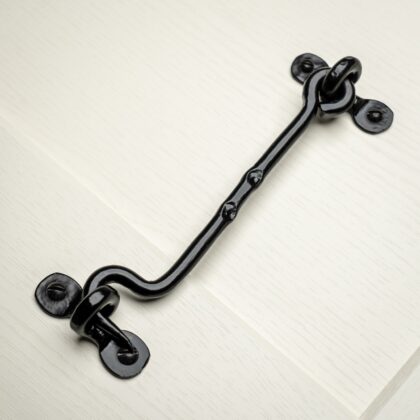
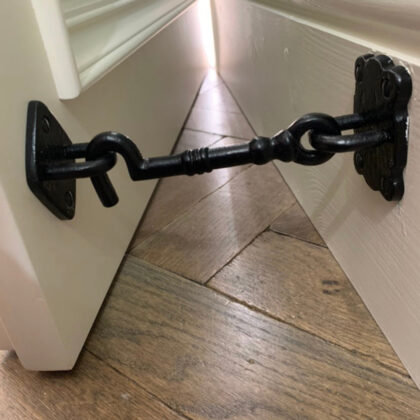
Black Cabin Hooks
are hand-forged from mild steel and available in lengths from 4 to 18
inches for interior doors, windows and shutters.
-
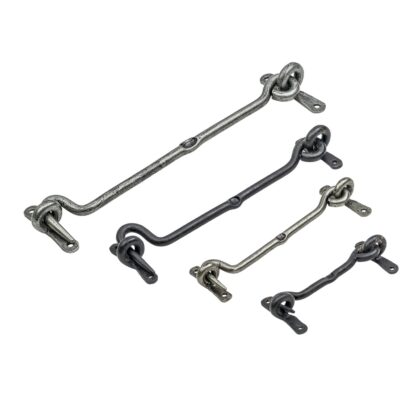
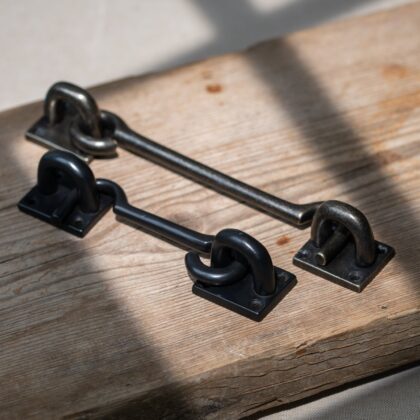
Forged Cabin Hooks
offer a traditional fire-forged appearance in a wide choice of sizes
and finishes.
-
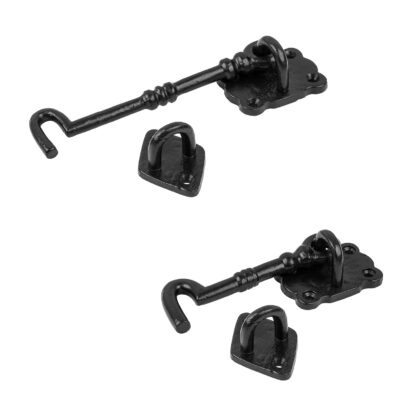
Tudor Cabin Hooks
are cast-iron fittings designed to coordinate with traditional
gate hardware.
-
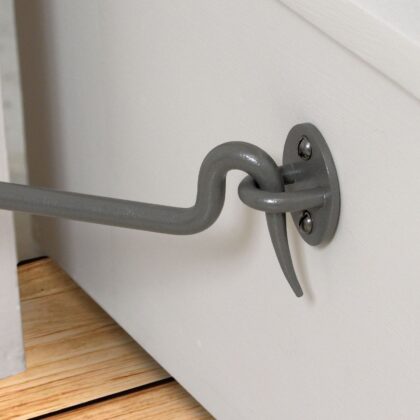
Cabin Hooks with Armor-Coat
have an advanced protective finish intended for internal and external
applications.
-
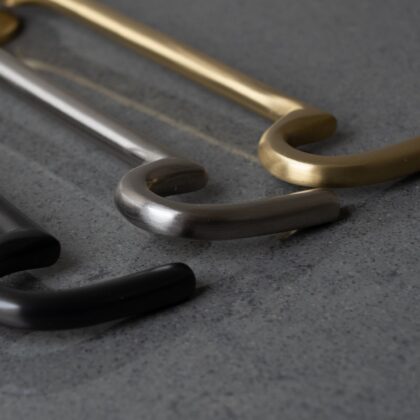
Bronze cabin hooks offer a weighty traditional fitting with a warm,
naturally characterful appearance.
Choosing an Internal or External Cabin Hook
Always check the individual product’s stated location before fitting a
cabin hook outside. Material, finish and exposure all affect exterior
suitability.
Standard Black Cabin Hooks are made from mild steel with a black powder
coating intended for interior use. They are not recommended for
external applications because prolonged damp conditions or damage to
the coating can lead to rust.
Armor-Coat cabin hooks are specifically designed for internal and
external doors and provide enhanced corrosion protection. They are a
stronger choice for exposed locations or projects using acidic timbers
such as Accoya.
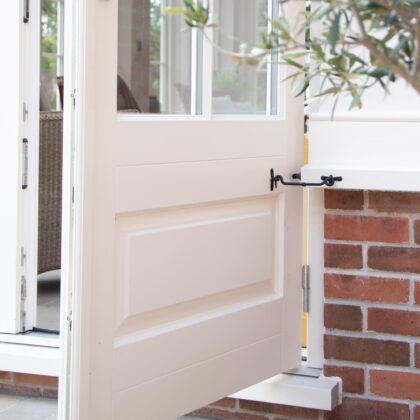
Tudor Cabin Hooks can be fitted to external doors, garden gates, sheds
and stable-style doors. However, they are not recommended for coastal
locations. Their moving parts and fixing points should be maintained in
accordance with the product instructions.
Selected forged designs may also be suitable outside when ordered in
the appropriate exterior finish. Do not assume that every black, iron or
forged cabin hook has the same weather resistance.
Choosing the Correct Cabin Hook Length
Measure the distance between the two fixing surfaces while the door,
window or shutter is in the required position. The hook must comfortably
reach its receiver without being stretched, forced or positioned at an
awkward angle.
A shorter hook may be suitable where an open door sits close to the
wall. Longer hooks can span wider gaps created by deep frames,
projecting handles, uneven walls or other architectural details.
Available sizes vary by product. The Black and selected Forged Cabin
Hooks offer lengths from 4 to 18 inches, while other designs may have a
smaller selection. Refer to each product page and dimension drawing
before ordering.
Cabin Hooks for Gates and Sheds
For a traditional cottage-garden appearance, Tudor Cabin Hooks can be
coordinated with black gate hinges, latches and bolts. They can be used
to hold suitable gates, shed doors and barn-style doors in position.
A cabin hook should not be relied upon as the primary security fitting
for a gate or outbuilding. Use an appropriate gate latch, bolt or lock
where security or resistance to forced opening is required.
Installing a Cabin Hook
Before fitting, position the hook and receiver together and test the
full movement of the door or window. Make sure the hook can be engaged
and released easily without rubbing against surrounding surfaces.
-
Fix both parts into sound timber or another suitably supported
surface.
-
Align the hook and receiver so the fitting is not pulled sideways
when engaged.
-
Check that the hook cannot strike the door, glazing or surrounding
joinery when released.
-
Use fixings suitable for the surface and intended location.
-
Confirm the product is appropriate for the expected wind exposure
and weight of the moving door or gate.
For doors exposed to strong winds, consider using a suitable
door stop
or other restraint alongside the cabin hook where appropriate.
Caring for Cabin Hooks
Keep the hook, receiver and moving points clean and check the fixings
periodically. Exterior cast-iron products may benefit from a light
application of suitable oil to moving parts and screw holes, following
the individual care instructions.
If a protective coating becomes chipped or worn, address the damage
promptly to reduce the risk of corrosion. Avoid abrasive cleaners that
may remove plated, lacquered or powder-coated finishes.
Explore our wider range of
door accessories
and
door stops
to complete your project.